
A Brief Analysis of Dunkirk's Opening Sequence
- Fatima Asad
- Mar 2, 2024
- 4 min read


Good Morning fellow media mates! Welcome to another one of my (slightly run-of-the-mill) media posts. Today i have decided to check of 'a brief analysis of a film opening' from my list of things i have yet to do for this blog. To accomplish this, I have chosen to dive into the opening of Christopher Nolan's wartime epic, "Dunkirk" (2017).
"Dunkirk" belongs to the war film genre, delivering an immersive portrayal of the Dunkirk evacuation during World War II. The opening immediately thrusts the audience into the heart of war, setting the tone for the intense and visceral experience that follows.
The movie opens with a long shot of six soldiers walking along empty roads while flyers are raining down on them. This flyers read " we surround you" and we can see the soldiers hand slightly trembling as he looks onto this piece of paper, implying the desperation and fear that these soldiers feel as they slowly become encircled by the enemy. The sky and atmosphere is dark and gloomy. The darkness and lack of color symbolizes the never ending dreariness of the life of a soldier who is stuck on sand. The bleak and desolate surroundings cultivate feelings of entrapment and hopelessness.


Additionally, the use of high contrast in the cinematography accentuates the stark visual elements, intensifying the sense of despair. The chiaroscuro lighting technique adds depth to the composition, enhancing the ominous atmosphere.
These titles have been used here to help contextualize the film as well as the props made by the Germans emphasizing that they have surrounded them also adds to the sense of desperation.
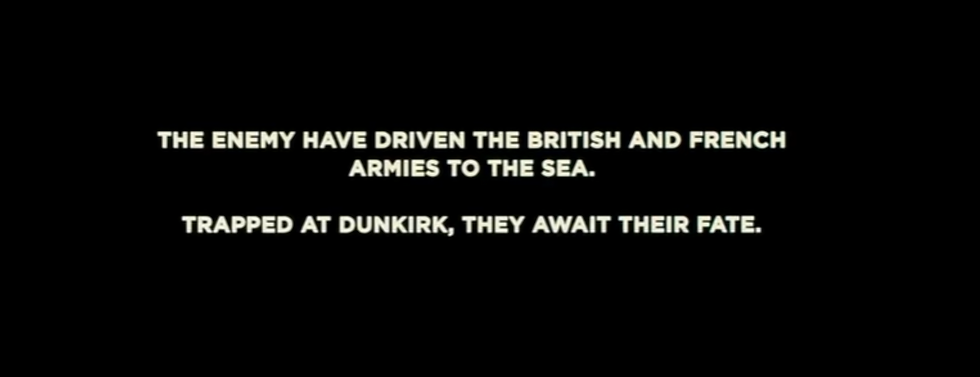
The opening sets a tone of imminent danger and urgency. The lack of dialogue and the relentless ticking clock in the soundtrack create an atmosphere of tension. The disoriented soldiers convey the chaos of war. The tone is one of survival and desperation, emphasizing the harsh realities faced by the characters. Moreover, the soldiers can be seen drinking up hoses or looking through an ashtrays for cigarettes. These actions show that they are looking for anything to keep them going.
In cinematographic terms, the use of handheld cameras during these scenes adds a documentary-like realism, intensifying the audience's connection to the chaos on screen. The shaky cam technique immerses viewers into the disorienting and unpredictable nature of the battlefield.

Suddenly, the movie shifts to heart-pounding aerial dogfights. The soldiers are under fire and begin to sprint to escape but all of them, save one are shot. The randomness of who survives shows that the men, on most occasions, rely on luck to survive.
Furthermore, the dynamic use of depth of field in the aerial sequences enhances the sense of scale, allowing the audience to perceive the vastness of the sky and the perilous nature of the dogfights. The quick-paced editing in these sequences adds to the frenetic energy, capturing the unpredictability of war.
I would like to add that, in just a few minutes of the opening sequence itself, Nolan uses a variety of camera movements to create a sense of urgency and tension. This has the effect of putting the audience right int he middle of the action.
During all this, the film uses a number of techniques, such as the close ups to capture the fear on the faces of the soldiers, slow motion to emphasis the violence and chaos of the battle as well as wide shots to capture the vastness of the beach and to create a sense of helplessness among the soldiers (as shown in the picture below).

Moreover, the incorporation of tracking shots in the midst of chaos allows for a seamless transition between different perspectives, enhancing the continuity of the narrative. The use of selective focus during close-ups directs the viewer's attention to specific details, intensifying the emotional impact of the scenes.
Another point to note is that, although I mentioned above that the color palette evoked feelings of despair and hopelessness, as our main character arrives at the beach, the frames are bathed in warm golden light, which represents hope and salvation.
From a color grading perspective, the strategic use of warm tones during pivotal moments serves as a visual metaphor, symbolizing resilience amidst adversity. The juxtaposition of the golden light against the earlier desaturated tones creates a powerful contrast, underlining the shift from despair to a glimmer of hope.
Moreover, in just a few minutes of the opening sequence itself, Nolan uses a variety of camera movements to create a sense of urgency and tension. This has the effect of putting the audience right int he middle of the action.
The opening sets up expectations of a raw and unfiltered portrayal of war. The lack of traditional exposition signals a departure from a typical war movie. Instead, it hints at a focus on the individual experiences of the soldiers and the overarching theme of survival against overwhelming odds.
Lastly, let's talk about how the ticking clock serves as a powerful symbol, representing the inexorable passage of time and the imminent threat faced by the characters. The ticking clock soundtrack becomes a character in itself, intensifying the mood. The absence of any other kind of music allows the ambient sounds of war, from distant gunfire to the roar of planes, to contribute to the immersive experience.
From a sound design perspective, the ticking clock serves as an auditory motif, creating a psychological impact on the audience. The strategic use of silence between the ticks heightens the tension, allowing the ambient sounds to emerge with greater clarity. This meticulous approach to sound enhances the overall sensory experience, contributing to the film's realism and emotional resonance.
In essence, the opening of "Dunkirk" is a cinematic tour de force. Through meticulous attention to detail in representation, narrative, character portrayal, symbolism, and cinematography, Christopher Nolan creates an opening that not only captures the audience's attention but also sets the stage for a war film that is both visually stunning and emotionally evocative.

With that we come to an end of yet another post, as I have completed one of the numerous tasks I have pending. See you again soon as I come back with another post another time!


Comments