
A 9 Frame Analysis
- Fatima Asad
- Mar 4, 2024
- 4 min read

Updated: May 18, 2024

Hello dear readers!
Today I will be doing a 9 frame analysis of the amazing film opening of "Saving Private Ryan" . To do this, I will choose any 9 frames from the opening sequence of this film, and give you a short analysis of each of those shots. This will be my final post under my research category and then we will be moving on to the preliminary task! So, without any further ado, let's get started on this.

The first shot is a close-up of an elderly man in a cemetery looking very perturbed and a bit shaken as he looks at one particular grave. The lighting in the background of this frame is bright and warm as the sun is shining but the man's face is partly covered in shadows and not that brightly lit up. This highlights his inner emotions. The reassuring hand on the shoulder of the man as well as the concerned look he is receiving from the woman in the back shows that others are also aware of the man's disconcert. The man's eyes are the colour of a dark and stormy sea, setting a stage for the events that follow in the course of the movie.
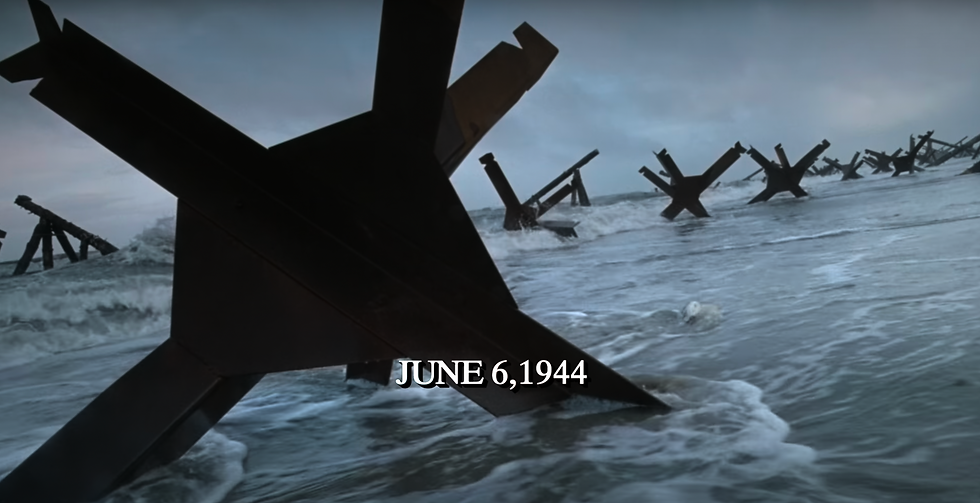
This frame is a mid shot view of a beach's shoreline looking out to the ocean with an overcast sky. The beach is strewn with a multitude of ominous man-made obstacles designed to make any attempt to reach land via the sea an unpromising endeavour. During this shot, the words, "June 6, 1944" provide the audience with the time and place the film's story begins: D-Day, World War II.The shot is relatively dark compared to the first shot, and this dark colour scheme evokes feelings of danger and unhappiness.
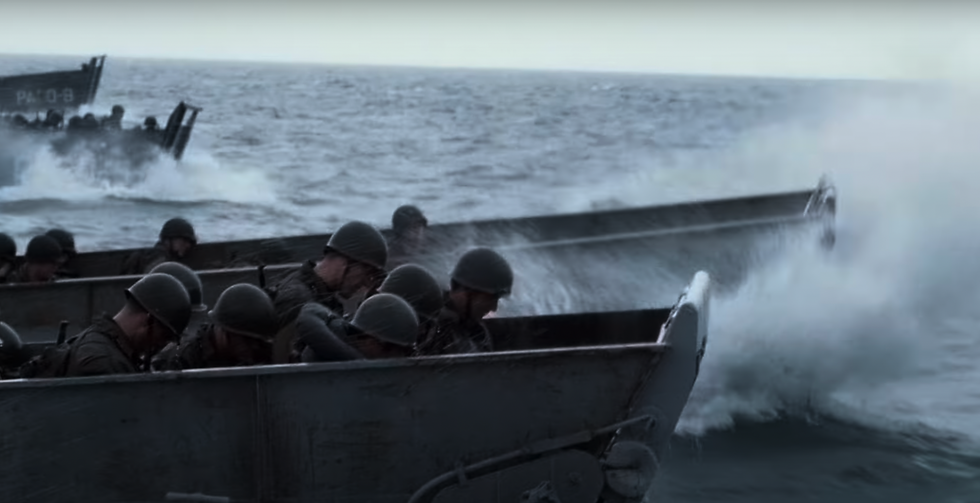
Next up is a long shot of soldiers in landing craft. The camera movement is frenzied and shaky. This chaotic movements and skillful positioning of the camera give the audience a feeling of actually being on the landing craft and a part of the strike force. Although the scene focuses on the members of a single landing craft, the audience is also made aware of several other landing crafts in the backdrop of the shot. This shows that the scale of the attack force is quite large.

Subsequently, the next shot is a close up of a trembling hand holding a rifle. The hand palpitations points out the extreme anxiety that the soldiers face as their bodies produce more adrenaline and their muscles tense up. The gun symbolises the conflict and violence as well as protection and defence. This shot evokes feelings of fear, intimidation and vulnerability.

In the next shot, the camera is positioned at eye-level as it records individual, medium close-up shots of the various soldiers onboard. The camera moves with the boat as it makes its way through the water and provides a visual sensation for the audience of personally being there and gazing into the soldier's eyes - an emotional connection with the subject is formed. We can also observe a few soldiers vomiting, which not only reflects their weakness and fear on the battlefront, but also adds an element of humanity to the whole affair. The subdued color scheme convey a tense and embattled feel as well as reflect duelling tension.

Next is a mid shot of a soldier giving out orders in a loud, booming voice, trying to speak over the roar of the waves surrounding him. The sound of the diesel engine that propels the craft is also very noticeable in the background. The soldier also uses hand movements, so that he is clear in what he is trying to convey.

Here is yet another close up of a soldier, who is quietly taking orders as he sits desolately on the craft. His eyes are covered in shadows and his face is blank, devoid of any emotion. This man represents the life of soldiers, who are often overlooked, who exist just to cary out orders, regardless of the turn it might take on their lives. This close up is followed by several other closeups, giving us an insight on the various kinds of emotions different soldiers face.

Immediately, as the bow rank falls, soldiers from the opposite side unleash hell upon the soldiers in the craft. The camera is placed level with the soldiers, and the audience can see how the soldiers getting killed left and right as blood is sprayed everywhere. The frantic , shaky camera movements also contribute, providing a sense of dynamics, immersion, instability and nervousness.

Lastly, we have here a perspective shot, that gives the audience a view they would have if they too were a soldier, standing amidst the chaos and the dead bodies, whose numbers on the floor of the landing craft increase by the second. The blood on the camera helps increase this effect and bring the horrors of the war closer.
With this, we come to the end of yet another post of mine.
Hope to see you soon in the next post!


Comments